
Smart Urban Mobility
Accueil › Smart Urban Mobility
A constantly evolving mobility
In recent years, the number of vulnerable road users has increased significantly, reflecting the growing diversification of alternative modes of transport and the rise of soft mobility.

Claire Legrand,
Head of Road Safety Affairs at PARIFEX
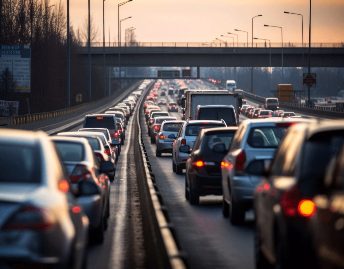

Mobility is constantly evolving. Cities are facing numerous challenges in terms of traffic and transportation. Continuous population growth is leading not only to an increase in journeys, but also to a diversification of the modes of transport used. The success of tomorrow’s mobility relies on technology and innovation that can integrate seamlessly into urban infrastructure, transforming traffic management while addressing safety concerns and environmental impact.
The challenge is significant, but essential!

Enhancing Vulnerable Road User Safety
In recent years, the number of vulnerable road users has increased significantly, reflecting the diversification of alternative modes of transport and the growth of soft mobility. Cyclists, e-scooter riders, pedestrians, and motorized two-wheelers are increasingly choosing these modes of travel, which are often more environmentally friendly and practical. However, vulnerable road users remain particularly exposed to traffic hazards. The issue is especially acute in rural areas, where the majority of accidents involving these users occur. On roads that are sometimes narrow and poorly designed, collisions can quickly become severe.
Reversing this trend requires an in-depth understanding of the road environment and high-risk areas, along with the adaptation of infrastructure to provide vulnerable road users with safe, clearly designated spaces that separate them as much as possible from motorized vehicles.


COMPAS
Collection of Counting Data
As mobility undergoes a profound transformation, traffic counting has become a fundamental tool for local authorities, providing a clear and accurate view of traffic flows. It enables them to adapt infrastructure to users’ needs, improve road safety, and support the transition toward more sustainable modes of transport.
Traffic counting is essential for analyzing traffic flows, determining the number and types of vehicles traveling along a given section of road, optimizing road safety through the identification of high-risk or congestion-prone areas, supporting the ecological transition by monitoring changes linked to sustainable transport modes, and enhancing the user experience through improved management of signage, dedicated lanes, intersections, and more.
Automatic Number Plate Recognition
Automatic License Plate Recognition (ANPR) is a key technology in road safety management and traffic enforcement. It enables the real-time capture and analysis of vehicle license plates on the road and offers numerous benefits, particularly in optimizing the processing of traffic violations.
By linking license plate recognition to relevant databases, the system can instantly detect offending vehicles, whether for speeding or unauthorized access to regulated areas such as low-emission zones (LEZs). Furthermore, integrating this technology with automated enforcement systems streamlines the issuance of fines, reducing the risk of error and accelerating the penalty process.
Thanks to its fast and accurate recognition capabilities, PARIFEX enables authorities to monitor traffic in real time and ensure effective enforcement of violations.

Urban Security & Perimeter Protection
Automatic Number Plate Recognition serves public safety, traffic management, and crime prevention. Its applications are wide-ranging: monitoring sensitive areas, detecting stolen vehicles, supporting border control, and tracking vehicles linked to investigations. By connecting license plate recognition to relevant databases, automated plate-reading systems can instantly identify suspicious vehicles. This automated approach enhances responsiveness while facilitating the work of law enforcement agencies and local authorities.