

Seniors on the road: how to drive safely ?

Partager

Seniors on the road: how to drive safely ?

As we age, our driving habits evolve. More cautious than younger drivers, seniors on the road remain more vulnerable in the event of an accident. According to the road accident report conducted by ONISR (National Interministerial Observatory for Road Safety), in 2024, 527 people aged 75 and older lost their lives on French roads. While their involvement in accidents is relatively moderate, their physical frailty increases the mortality rate, which is 1.5 times higher than that of other age groups.

So, how can we better protect our elderly on the road?

More severe injuries, higher risk

In the event of an accident, the consequences are often more severe for seniors. But why?
Due to their fragility, injuries are more serious, and recovery is more complicated. What might be a simple bruise for a younger driver can quickly become a life-threatening emergency for an older person. Aging also leads to slower reflexes, diminished vision, and sometimes hearing impairment, which increases reaction times. When a sudden brake or unexpected obstacle occurs, the margin for error is reduced, thereby increasing the risk of an accident. Moreover, chronic illnesses such as heart problems or diabetes can impair driving ability, as can certain medications that affect alertness and reflexes.

According to ONISR, in 2024, around 1,300 seniors were seriously injured on the road, a 7% increase compared to 2023. This alarming statistic highlights the importance of adapting both their driving and the road environment.

Outside urban areas: an underestimated danger
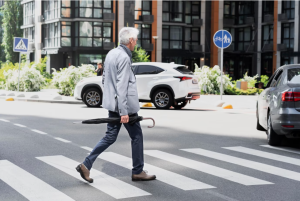
Senior sur la route piétonContrary to what one might think, seniors are just as at risk in urban areas as on roads outside urban areas, where speeds are higher and the margin for error is smaller. 50% of pedestrian fatalities and 51% of cyclist fatalities on secondary roads are aged 65 or older, according to ONISR. Although mortality on these roads decreased between 2023 and 2024, the rate remains high.


On these roads, reaction time becomes a crucial factor. Signage can sometimes be more complex, with less visible intersections and poorly separated lanes, making decision-making more difficult for older drivers. Over time, distance assessment also becomes trickier. Estimating the speed of another vehicle or judging the distance needed to overtake can become more approximate, increasing the risk of dangerous maneuvers.

Seniors on the road: how to ensure their safety?

It’s not about taking away their driving license but rather ensuring they can drive in optimal safety conditions. But what are these solutions?
Regular medical check-ups, as recommended by Cap Retraite, would allow closer monitoring of visual and auditory capabilities, as well as reflexes, to anticipate potential difficulties. Improved signage, with more readable signs and enhanced road markings, could also make driving easier and reduce mistakes, as noted by Silver Éco.
On the vehicle side, new technologies offer valuable driving aids. Blind-spot detection, emergency automatic braking, and lane-keeping assistance help compensate for slower reflexes and prevent many accidents, according to the French institution Sécurité Routière. Finally, tailored training programs, as recommended by the Prévention Routière association, would offer seniors the opportunity to update their knowledge and better understand the changes in traffic laws.

 Because aging well also means continuing to drive safely!

Contact us

Fields marked with * are required.

This field is for validation purposes and should be left unchanged.

Articles similaires

Featured-ENNews

24 March 2026

Road Safety: What the Numbers Force Us to Confront

Every year, preventable accidents claim the lives of thousands of people on our roads.

Lire la suite

News

23 March 2026

Powering the Future: How LNG is Adapting to a Changing Energy World

AVEVA Engineering Migration: with end of support announced for 2027, the question is no longer if you should migrate, but how and when.

Lire la suite

Featured-ENFeatured-ENNews

5 March 2026

Secure your Data through AVEVA Engineering Migration

AVEVA Engineering Migration: with end of support announced for 2027, the question is no longer if you should migrate, but how and when.

Lire la suite

Parifex
Privacy Overview

This website uses cookies so that we can provide you with the best user experience possible. Cookie information is stored in your browser and performs functions such as recognising you when you return to our website and helping our team to understand which sections of the website you find most interesting and useful.