

Road Safety Can Now Rely on 3D-LiDAR Technology

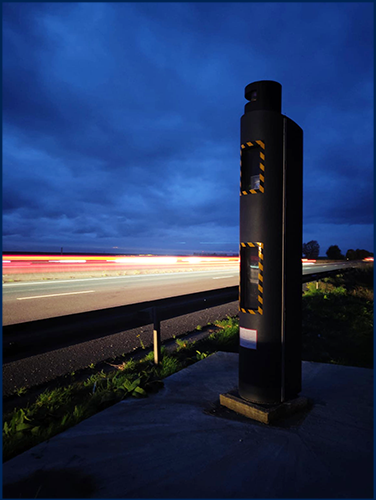
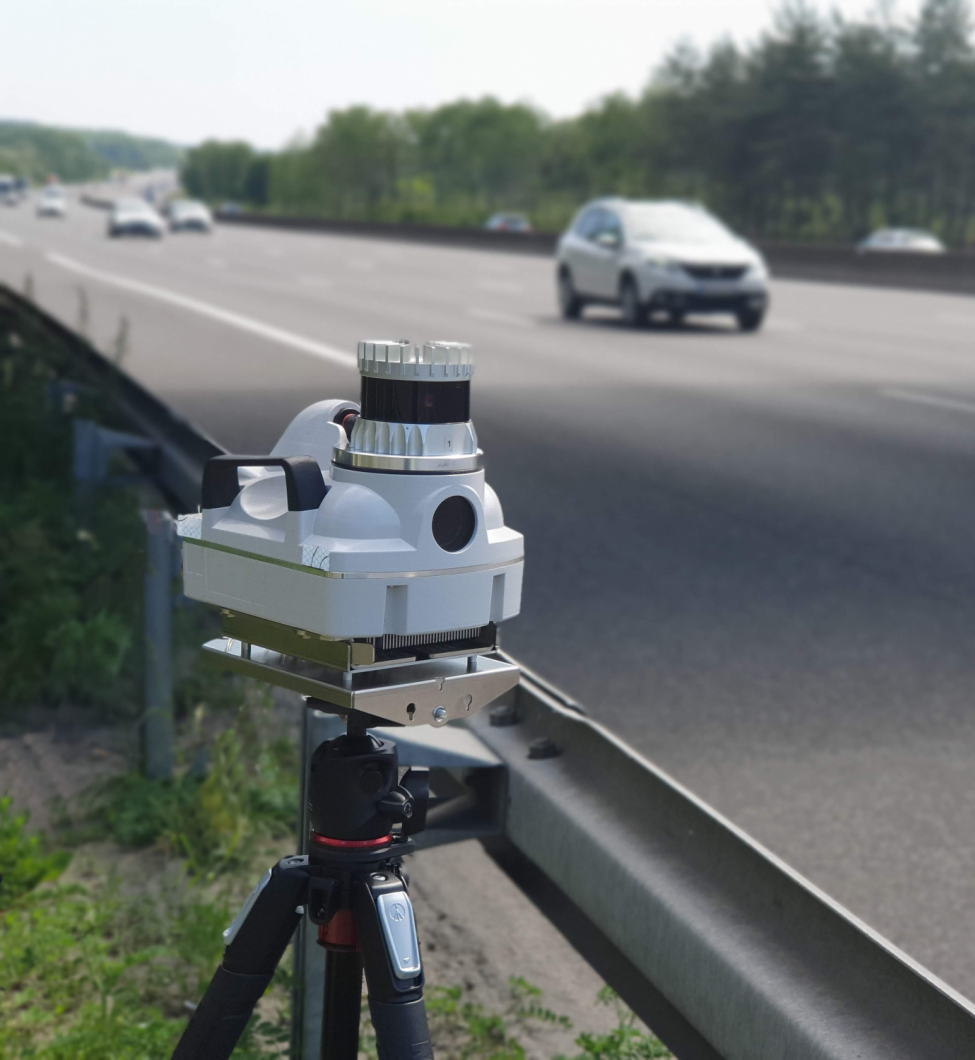
Technology has already been getting into the mobility market for several years. Regarding road safety, PARIFEX chose the 3D-LiDAR technology to strengthen its speed control systems.

3D-LiDAR, the outsider in speed control systems

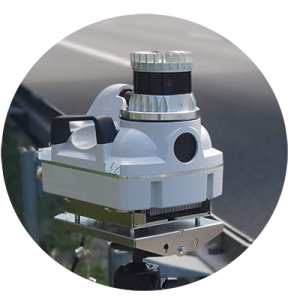
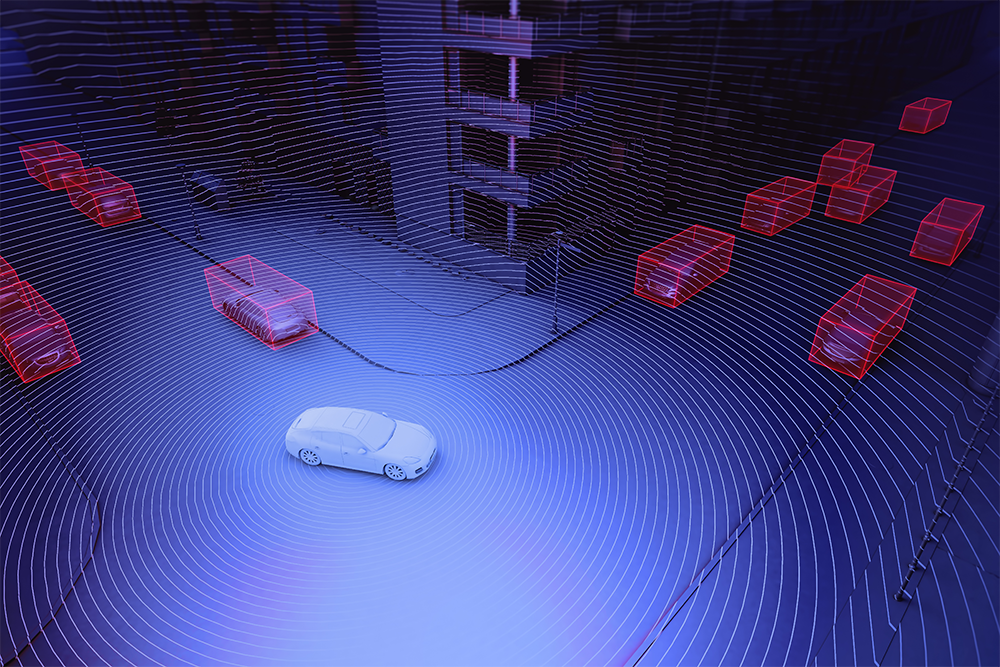
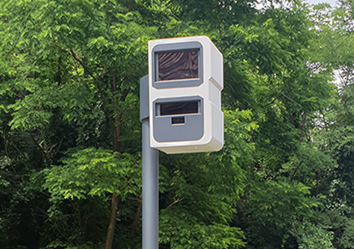
The 3D-LiDAR sensor creates a 3D map through point clouds and makes it accurate to the centimeter. “PARIFEX has decided to include the 3D-LiDAR in its existing solutions to meet French Ministry of Interior needs. Indeed, the French Ministry needed a fixed sensor including a wide field of vision. That is why PARIFEX chose this technology including a 360 degree vision unlike the traditional speed cameras able to scan a limited field of view.”, says Désiré Codo, PARIFEX’s R&D Director. Even though most of 3D-LiDAR sensors have been designed for a mobile use, principally for autonomous vehicle management, PARIFEX decided to distort it and add  it in its fixed road sensors including NANO and NANO-CAM sensors. 

A 360-Degree view

Set up overhead, the 3D-LiDAR sensor enables a 360- Degree view and then a better space detection than other sensors. “Unlike an usual speed control system that needs a specific orientation, the small and light 3D-LiDAR sensor is easy to set up in any orientation and requires little processing power to offer reliable and accurate control.” precises Codo.

3D-LiDAR vs camera

According to him “The 3D-LiDAR offers better capabilities than the camera. Even though the camera detects the reality with two-dimensional images whose quality depends on daylight, the 3D-LiDAR gets a 3D point cloud with a constant quality whether in daylight as well as at night, even if in humidity conditions. The point clouds are lighter than an HD image and that makes 3D LiDAR a strong solution for onboard real time solutions.” Through the quick image processing time, it enables an increased reactivity and real time data collection. Moreover, the reliable reality modelling allows a better vehicle classification.

A unique sensor

While various sensors were necessary to classify different kinds of vehicles such as cars, trucks, motobikes…, only one 3D sensor is enough for a multiple detection. “With a unique sensor, the risk of desynchronization between sensors disappears since all the data came from the same device in real time.” adds Codo.

Contact Us

Fields marked with * are required.

This field is for validation purposes and should be left unchanged.

PARIFEX Celebrates the World Day for Safety and Health at Work

28th April, 2021 - PARIFEX Celebrates the World Day for Safety and Health at Work

On 28th April, 2021, on the occasion of the World Day for Safety and Health at Work, Audrey Gasse, Continuous Improvement Manager, explains the PARIFEX safety and health at work policy, along with the actions to protect employees against physical and mental risks. Online sport lessons, safety golden rule, organisation of remote working… PARIFEX unveils its strong policy to strengthen safety and health at work.

Contact us

Fields marked with * are required.

This field is for validation purposes and should be left unchanged.

Our news

Cities and the road safety challenges

Speed is one of the cities’ road safety challenges and it is not the only risk on the roads and throughout the city streets. The increase in modes of transport like bikes and scooters has brought an increase in dangerous behavior. While roads and streets cannot be stretched, local authorities have to find solutions to get all the users to live together.

Speed control

Reducing speed in urban areas is often the first step to reduce accidents, that is why vehicle speed is already limited to 30km per hour in many city centers. Local authorities are struggling to be able to accurately detect speed infringement, and especially including criteria such as the multi lane detection, the vehicle classification, two-wheeled vehicles… Some cutting-edge speed control systems allow to get more than the precise vehicle speed measurement and offer the distance detection, the vehicle tracking through the 3D LiDAR technology, etc.

IMG_8797

But not only

Given the increase in vehicles and individual means of transport, especially since the beginning of the COVID crisis, infringement go on even more increasing. The capability to manage the circulation flows and to get them to live together remains one of the man issues for local authorities. The diversified users have brought many infringement possibilities such as running red lights, circulating on bus or cycle lanes, right-of-way violations… Cities need to count and identify all the users using roads and streets, every type of vehicle and pedestrian, in order to be able to detect every possible infringement.

A better traffic flow management through appropriate infrastructures

Traffic issues include environmental issues because of the direct impact of the increase in circulation on the environment and health. While more than 50% of the global population live in the town, the UN forecasts that they will be 60% by 2030. Road safety challenges have become one of the major issues regarding urban infrastructure and the increase in modes of transport involves the appropriate management of all the traffic flows. Some solutions allow to accurately identify and classify the different road users, count them and then collect data necessary to adapt the urban infrastructure.

Contact us

Fields marked with * are required.

This field is for validation purposes and should be left unchanged.

Collecting Data, the First Step toward Smart Cities

Collecting Data, the First Step toward Smart Cities

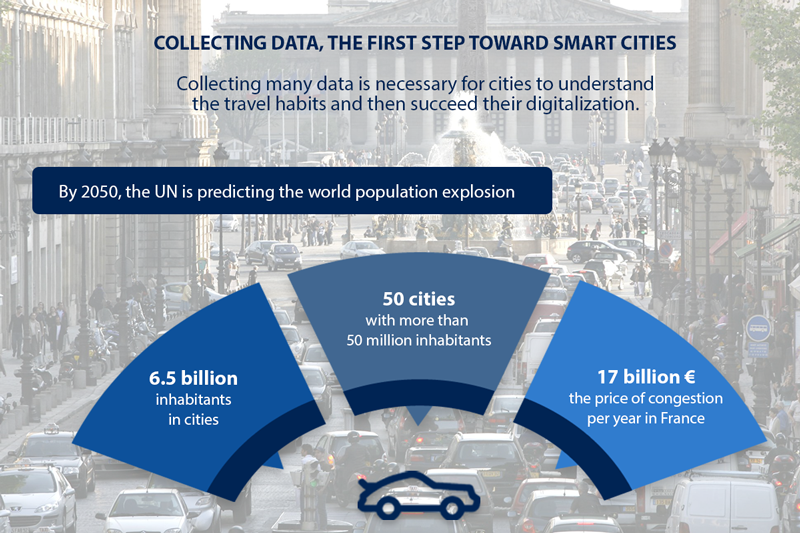
Collecting many data is necessary for cities to understand the travel habits and then succeed their digitalization.

Traffic data collection is a key topic for cities and mobility digitalization. According to the United Nations, 68% of the world population will live in a city by 2050*, that is why cities are hurrying up to optimize population flows and provide efficient means of transport. It is time for cities to go forward through innovating environment friendly transport.

21.02.Infographie_collecte_données_VE

I want to be contacted

Fields marked with * are required.

This field is for validation purposes and should be left unchanged.

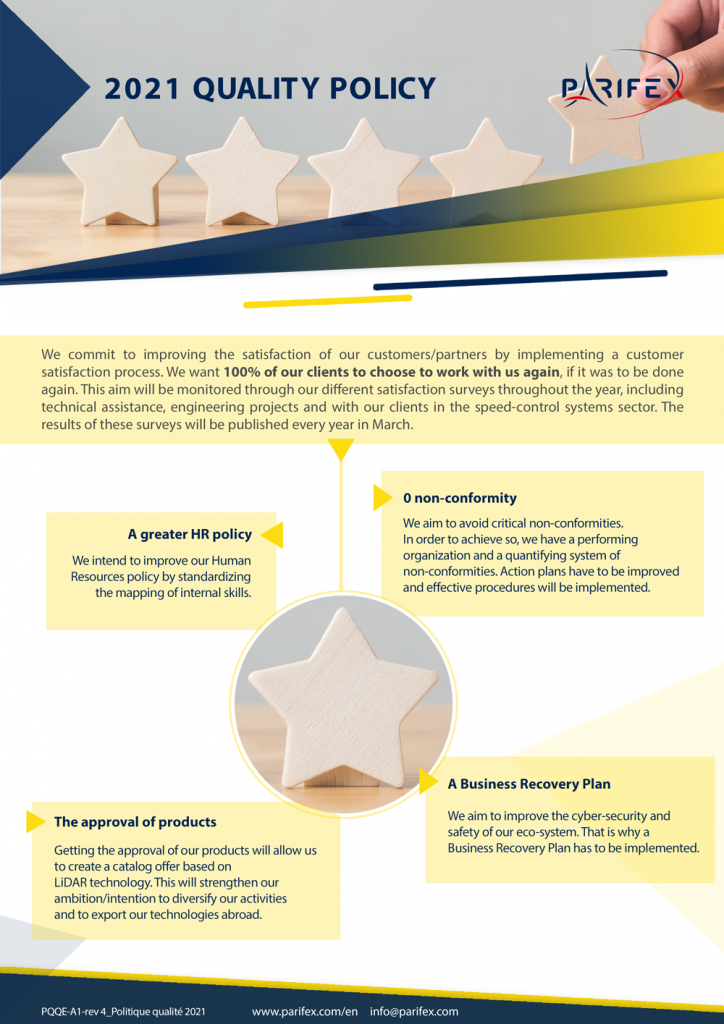
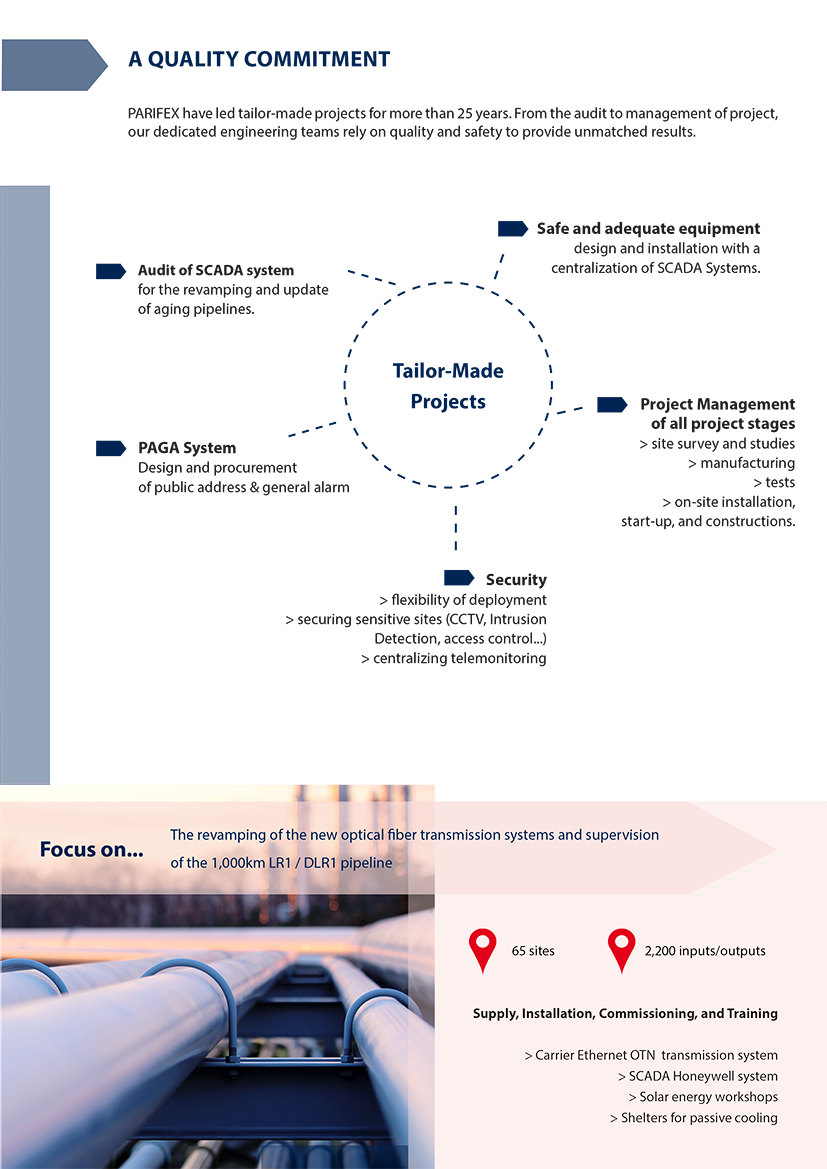
Our 2021 Quality Policy

Quality at the heart of our activities

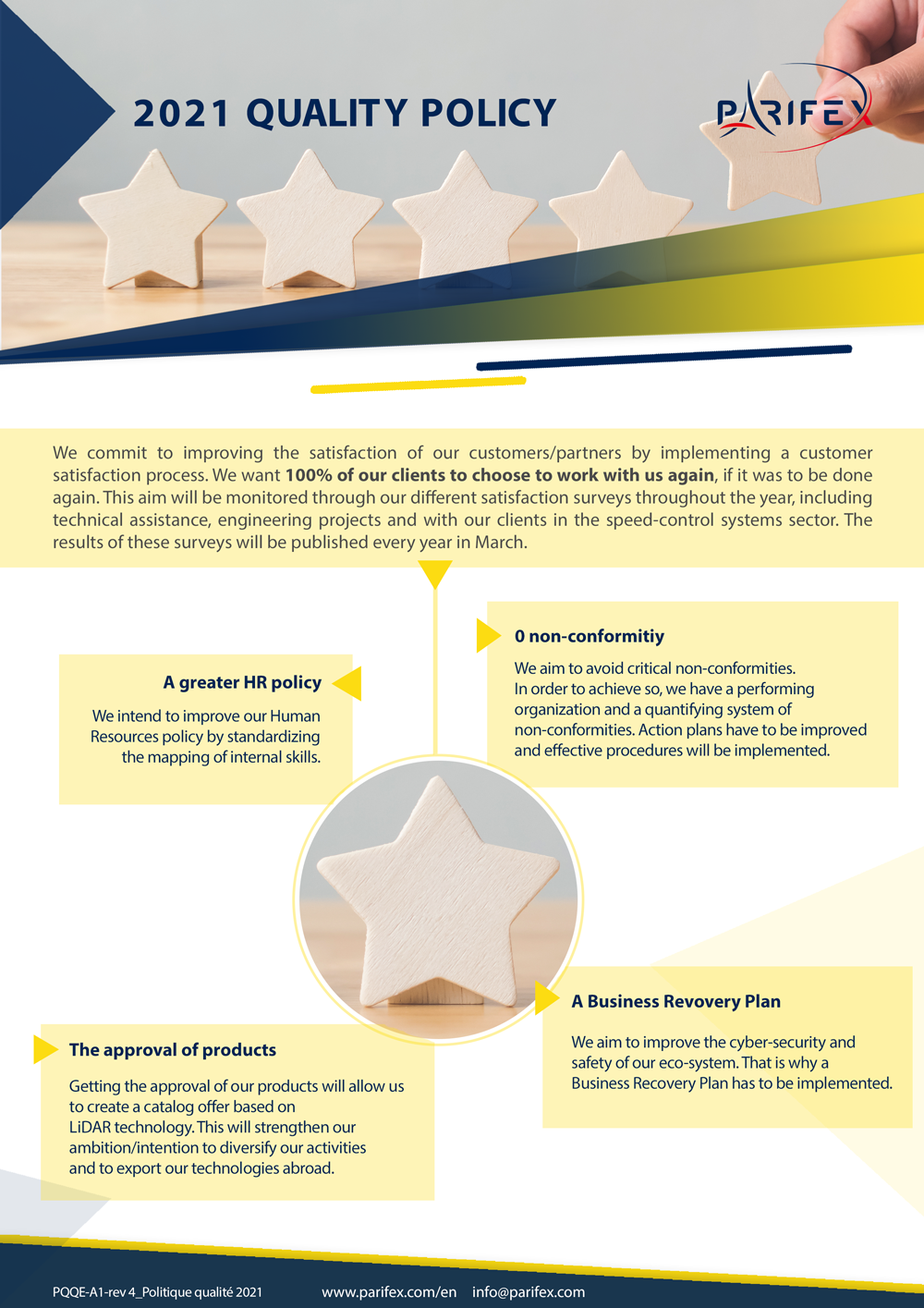
We commit to improving the quality of our activities and the satisfaction of our customers and partners by implementing a customer satisfaction process. We want 100% of our clients to choose to work with us again, if it was to be done again. This aim will be monitored through our different satisfaction surveys throughout the year, including technical assistance, engineering projects and with our clients in the speed-control systems sector. The results of these surveys will be published every year in March.

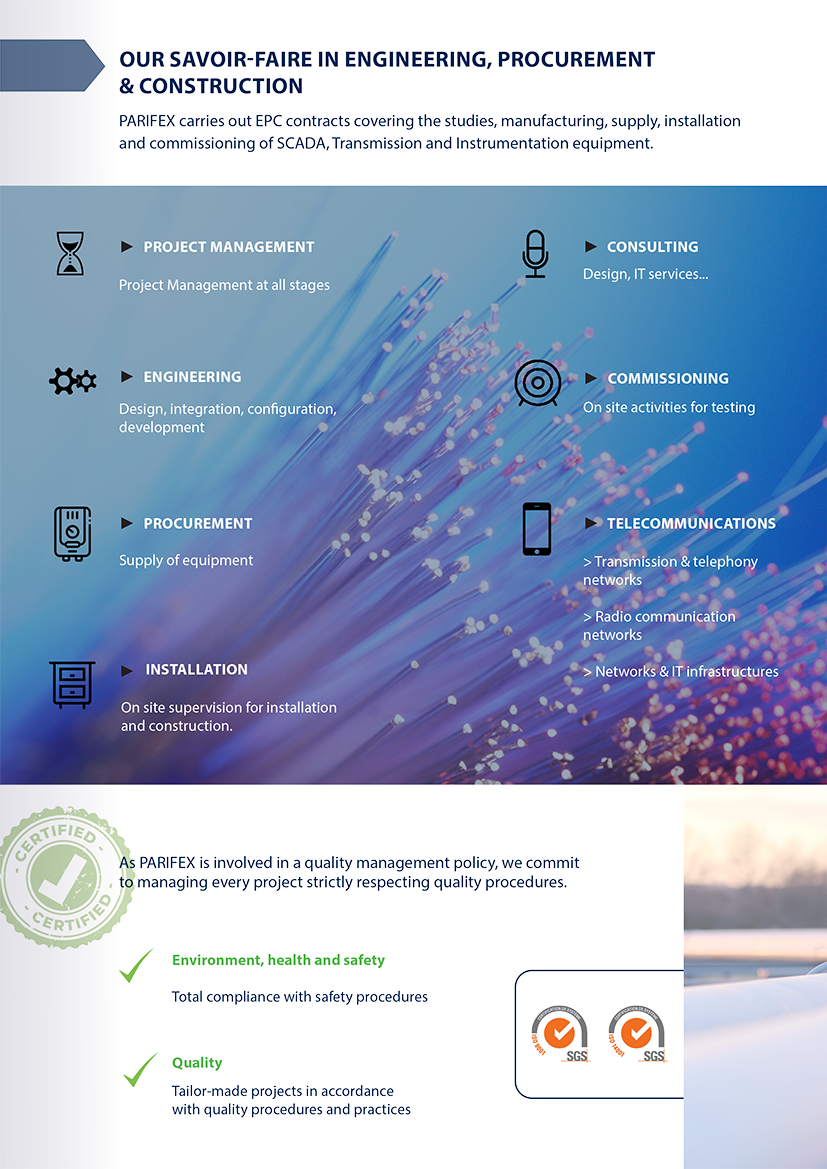
PARIFEX is a ISO 9001 ans ISO 14001 certified company. Learn more about the certification.
Contact us

Fields marked with * are required.

This field is for validation purposes and should be left unchanged.

2021 Environmental Policy

Adapting our activities to the environment requirements

We are committed to an Environmental Approach which deals with Environmental Aspects we have identified for our company. 

We are committing to continously improving our environmental and system performances, protecting the environment and preventing from pollution during emercies, and complying with requirements.

We aim to improve the MTBF, optimize the electricy consumption of our equipment, and establish the company carbon footprint.

PARIFEX is a ISO 9001 ans ISO 14001 certified company. Learn more about the certification.
Contact us

Fields marked with * are required.

This field is for validation purposes and should be left unchanged.

Vehicle Identification on A Picture – Zeming Liu’s Point of View

According to Zeming Liu, Innovation Hub Manager in PARIFEX, “At first sight, the speeding vehicle identification seems impossible while looking at a 2D picture including various vehicles. However, I tell you how to do…

Zeming, Liu, as Innovation Hub Manager at PARIFEX, which technical innovation do you want to share with our readers?

I am going to talk about the Vehicle Identification System. At first sight, it seems impossible to know which vehicle has gone too fast while looking at a 2D picture including various vehicles. This system allows to accurately identify the speeding vehicle through two principles: the vehicle recognition and the capability to cut it out on the picture.

How does it work precisely?

Firstly, as the picture will be in two dimensions, perspective must be defined with the sensor. Through our research, we have found robust image processing solutions in order to determine the leak point on the road and then easily identify the lanes despite difficulties like shadows which could distort the information (picture on left). Through our mathematical studies and research in geometric equations, we are able to correct the perspective on the road and draw the lanes without any additional on-site measures. When the sensor starts, it is automatically configured depending on the location.

Can you guarantee that the identified vehicle is the defective one?

Our research has enabled to correct perspective and prove which is the defective vehicle. On a picture showing an offense, the information in two dimensions is not deformed by the perspective through a mathematical algorithm found by PARIFEX which creates a linearity with the distance in three dimensions measured by the LiDAR sensor. On the image, the vehicle has two information in terms of distance: a distance in three dimensions and another one defined by our picture analyzing algorithm. Given their linear relationship (picture on right), the 3D distance allows to determine on which line is the vehicle. When we know the 3D position of the vehicle, then we can easily identify the lane.

Is there an impact on the use of the sensor?

The automatic calibration of the sensor is easier and does not need any intervention of a surveyor, for example. The user only needs to put the sensor by the roadside and wait for around thirty vehicles passing by in order to have the sensor ready to use.

Fields marked with * are required.

This field is for validation purposes and should be left unchanged.

NEWSLETTER #2 – Editorial by Franck Peyré, CEO OF PARIFEX

Most of all, I wish to express my best wishes to you for this new year. The 2020 “extra-ordinary” year has finally come to an end and we are beginning a new more prosperous one.

We are proud to begin this year as ISO 14001 certified company. After being awarded ISO 9001 in 2018 for the quality management system, PARIFEX gets a second certification providing assurance that the environmental impact of the company activities is being measured and improved. We also hope that our clients could benefit from our efforts to improve their own carbon footprint.

This certification is a true recognition for our company because it shows that we are convinced that an environmental approach will be necessary in the future and we want to be an actor of it. The certification recognizes the commitment, efforts and improvements of the different departments of the company for several years.

PARIFEX will then proceed to the assessment of its carbon balance in order to set up many actions improving energy savings.

Thanks to you, 2021 begins with a lot of projects. You deeply desire to improve traffic, digitalize cities, struggle against pollution, make transportation easier, etc.

Our department dedicated to the transformation of mobility and Smart Cities supports you, such as for the “Routes et Rues” project (Roads and Streets), led by Cerema for the Minister of Ecology. It encourages innovative solutions for roads and streets. This ambitious project aims to test in intelligent counting solutions in real condition in order to improve the urban and inter-urban transport infrastructure.

The topic of mobility has no borders and PARIFEX is working with companies in Denmark, Germany, Egypt, Switzerland, Australia, etc., to set up speed control systems and intelligent counting.

Finally, PARIFEX is proud to become a member of the prestigious Intel® IoT Solutions Alliance which supports the major actors for innovation, especially in IoT. This program encourages/supports the PARIFEX intelligent sensor NANO-CAM including many functionalities to deploy a smart intelligent system.

In 2021, we will continue to keep our distance but not between us. We will stay at your side more than ever.

I want to be contacted

Fields marked with * are required.

This field is for validation purposes and should be left unchanged.

PARIFEX joins the Intel® IoT Solutions Alliance

PARIFEX is proud to be a new member of the Intel® IoT Solutions Alliance

As one of the world’s most trusted ecosystems, the Intel® IoT Solutions Alliance helps companies deliver first-in-market IoT solutions and accelerate the design and deployment of intelligent devices. 

This collaboration will essentially highlight the NANO-CAM sensor designed by PARIFEX. It can be used in multiple situations in order to manage traffic road safety. NANO-CAM detects all static and moving objects in its field of view at 360 degrees. It allows to track different targets and can detect multiple informations about them like dimension, direction, speed, distance, classification.

The Intel® Partner Program accelerates innovation

Intel® Partner Alliance unifies partners and encourages opportunities under a singular, modern program to accelerate innovation, collaboration, and growth.  The company shares partners and solutions through the impresive Intel® Solutions Marketplace

The program also offers the Intel® Partner University including competencies, webinars, and courses that move  business forward.

Learn more about PARIFEX solutions

Fields marked with * are required.

This field is for validation purposes and should be left unchanged.

PARIFEX whishes you a Very Happy New Year 2021!


Dear Partner,

PARIFEX wishes you a Wonderful Winter Season

and a Very Happy New Year 2021!

Welcome to 2021 and the great projects we will lead together.


I want to be contacted

Fields marked with * are required.

This field is for validation purposes and should be left unchanged.

Parifex
Privacy Overview

This website uses cookies so that we can provide you with the best user experience possible. Cookie information is stored in your browser and performs functions such as recognising you when you return to our website and helping our team to understand which sections of the website you find most interesting and useful.