Next-generation mobility solutions: the key takeaways of the ITS European Congress Webinar

ITS European Congress has summarised the key takeaways from last week's ITS European Congress Webinar! 👉Take this opportunity to read more about one of the main Congress topics: Next-Generation Mobility Solutions 💡

Smarter and more sustainable mobility will be achieved based on multiple inter-connecting factors, not least cutting-edge technology to support innovation and create next-generation solutions: from AI, automation and autonomous vehicles to mobility data and digital enablers such as 5G and 6G.

These topics were explored by an expert panel in the latest webinar ahead of the ITS European Congress, which takes place at the MEETT Exhibition and Conference Centre in Toulouse, 30 May to 1 June. ‘Next-generation solutions’ is one of the main Congress topics this year.

“Future smart mobility requires leading-edge technology and connecting the dots in terms of vehicles, technology, infrastructure, people and goods,” says Joost Vantomme, CEO of ERTICO-ITS Europe. Solutions being developed, tested and deployed now – including projects and platforms managed by ERTICO – are shaping the future of traffic management and traffic efficiency, safer roads, logistics, and cleaner greener transport. Mobility data, edge computing, artificial intelligence and cyber-resilient infrastructure are important elements in providing these solutions.

All about the data

“In next-generation solutions, data is the common denominator: using data and information to benefit moving people and goods, in urban mobility, autonomous transport, platooning, and so on,” says Coen Bresser, Senior Manager of Innovation and Deployment, ERTICO-ITS Europe. He points to the importance of FAIR Data Principles around data availability, accessibility, interoperability and useability. ERTICO innovation platforms and partnerships cover all these areas.

The work of Dutch C-ITS data aggregator Monotch illustrates the critical role of data, plus the need to move from trials to mass deployment: “Next-generation Cooperative Intelligent Transport Systems mean serving a massive audience compared to previously, and having a far greater impact,” says Menno Malta, Monotch CEO and founder. “This is a multi-stakeholder ecosystem, with many data providers and consumers. And while C-ITS has made huge progress, technical and organizational obstacles remain that can block the large-scale deployment.”

Designed to overcome these barriers, the Monotch TLEX platform is, he says, a game-changer. Three large-scale live use cases are deployed in 29 of the Netherlands’ 40 main cities, with two million active vehicles connected in the ecosystem and more than 1 billion C-ITS data exchanged every day. Benefits seen include a 15.5% reduction in CO2 emissions, a 10% reduction in travel times, and an estimated 4.4% reduction in fatalities and a 4.8% reduction in injuries. Monotch is presenting and exhibiting in Toulouse.

Safer roads

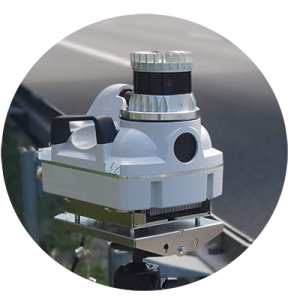
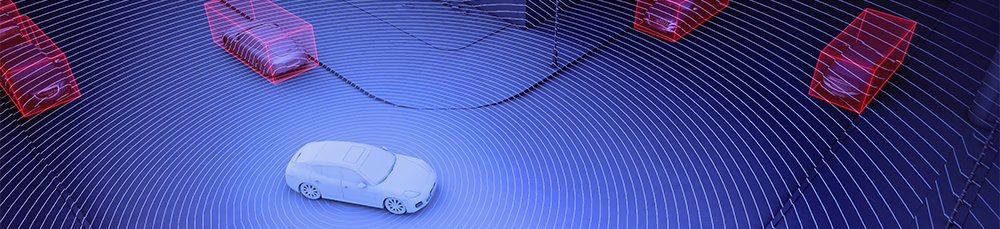
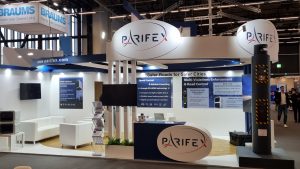
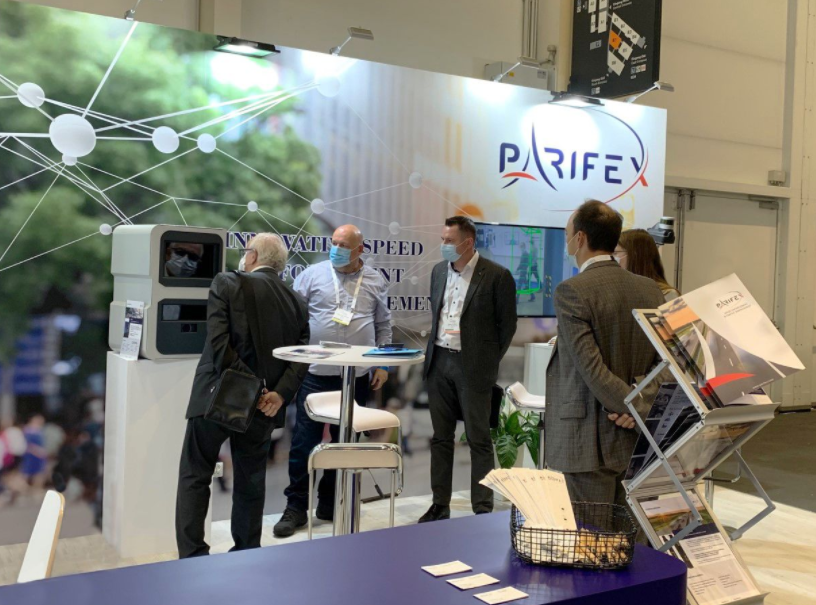
Continuing the safety theme, ERTICO partner and Toulouse exhibitor PARIFEX has adopted 3D LiDAR (Light Detection and Ranging) tech to strengthen its speed control systems. Its approach combines 3D LiDAR with a camera, image processing and AI to make roads safer in multiple settings, providing a 360-degree field of view, speed measurement, classification, identification, tracking and accurate data collection, all in real-time.

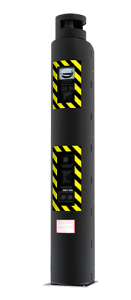
“We place great importance on innovation, and road accidents and mortality rates are a major concern: we want to protect all users and especially the most vulnerable,” says Nathalie Deguen, PARIFEX speed enforcement department. 3D LiDAR provides increased control, with the multifunctional NANO-CAM sensing solution providing efficiency and precision. This approach can be applied in diverse applications including traffic management and autonomous vehicle projects, helping future mobility to be smarter and safer.

Towards CAD safety assurance

“Connected & Automated Mobility has the potential to make transport safer, greener and more accessible, but only if it’s done right,” adds Tom Alkim, Strategic Adviser CCAM at traffic and mobility management service provider MAPtm, which is part of the Traffic Management for Connected and Automated Driving (TM4CAD) project consortium. “Questions remain, including how to integrate connected and automated vehicles (CAVs) into broader transport systems, and how they interact with other forms of mobility”.

In this context, Operational Design Domain (ODD) describes the combination of operating conditions under which a driving automation system or feature is designed to function. Gaps emerge, however, usually due to changes in infrastructure, traffic conditions and weather. To help overcome those gaps, TM4CAD is exploring Distributed ODD Awareness for CAD systems. This means vehicles are aware of their surroundings – scenery, environments, dynamic elements – via maps, vehicle sensors, roadside equipment and more, with information about different attributes also coming from third parties. Data and connectivity are, again, core requirements.


Making ITS tangible in Toulouse

The three-day ITS European Congress combines a high-level programme, comprehensive exhibition and detailed technical agenda, with more than 300 submissions received across the main Congress themes: next-generation solutions; services for citizens; green and sustainable mobility; from large scale trials to deployment; and cities as logistics hubs. “Our opening ceremony will feature a fantastic inspirational speaker, the Toulouse-based astrophysicist Dr Sylvestre Maurice, who discovered ice on the Moon and water on Mars,” says Lisa Boch-Andersen, Director of Communications, Congresses & Events, ERTICO-ITS Europe.

The Congress also includes the ITS Summit: a rare opportunity for industry leaders and senior representatives from the local and national government to meet and discuss ITS issues in roundtables. Topics to be explored include data ownership and access to data, inclusion and the digital divide, data sharing, and interoperability. Lisa adds, “Registration for the Congress is open now, and we hope to see you in Toulouse.”

Text by ITS European Congress

Watch the full recording of the ITs European Congress webinar

Contact us

Fields marked with * are required.

This field is for validation purposes and should be left unchanged.

Customer satisfaction, approval of our products, performing organization… discover our quality commitments for 2022

Our quality commitments for 2022

Our quality commitments for 2022 are our priority.

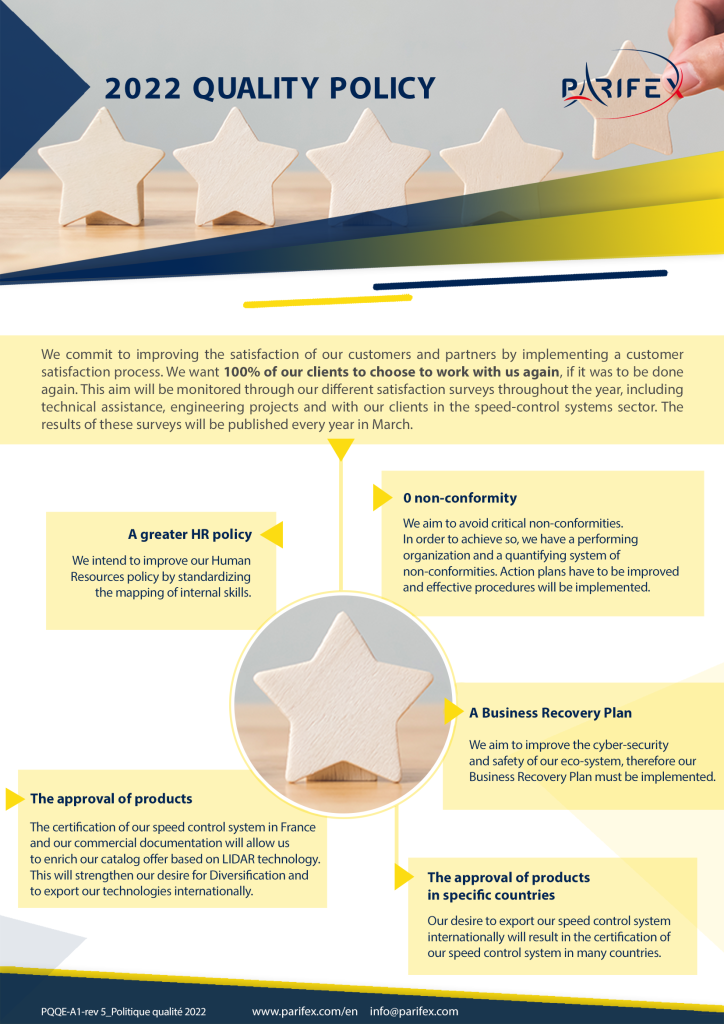
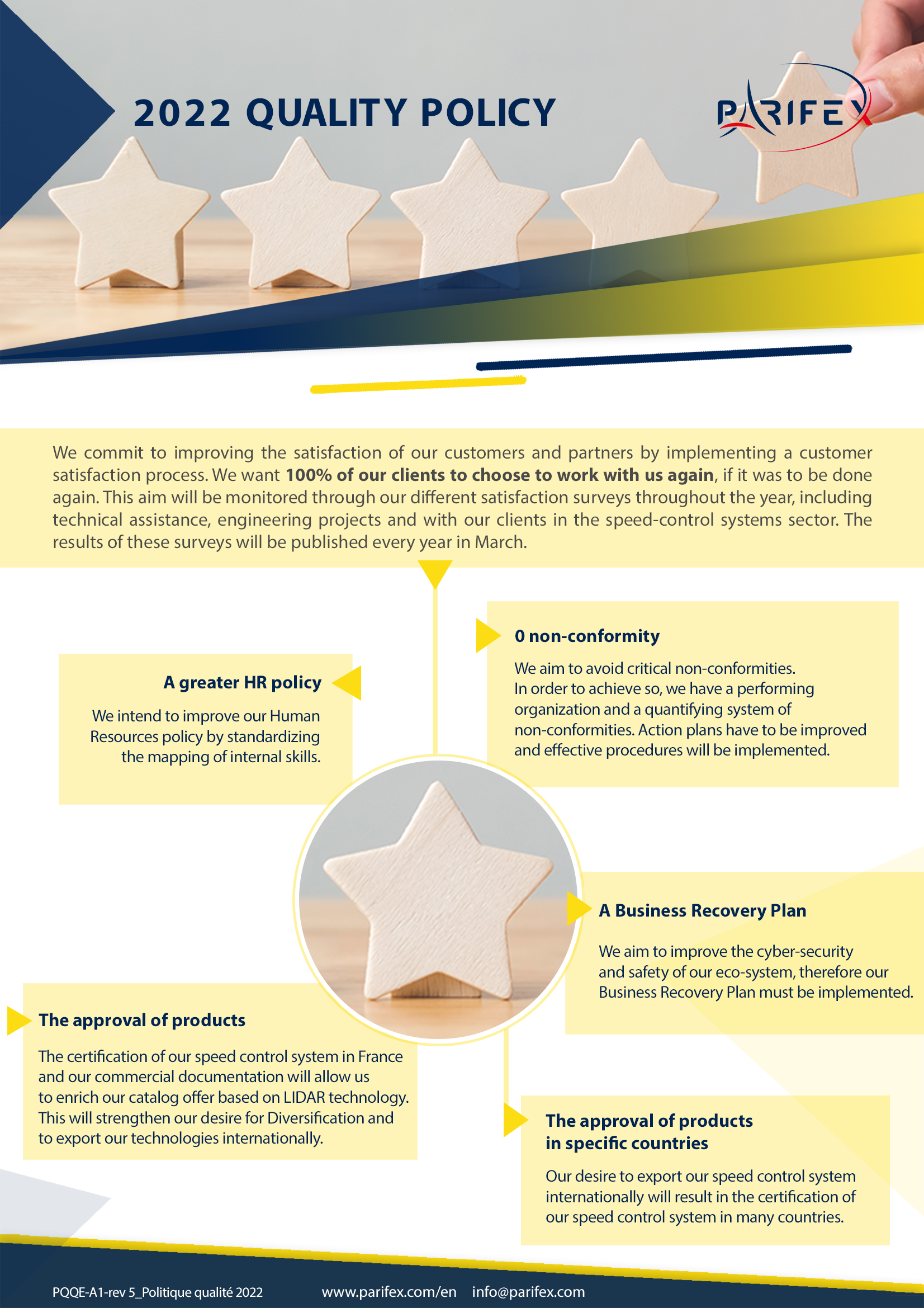
We commit to improving the quality of our activities and the satisfaction of our customers and partners by implementing a customer satisfaction process. We want 100% of our clients to choose to work with us again, if it was to be done again. This aim will be monitored through our different satisfaction surveys throughout the year, including technical assistance, engineering projects and with our clients in the speed-control systems sector. The results of these surveys will be published every year in March.

For 2022, we also want to make our products approved in some countries to work beyond our borders.

PARIFEX is a ISO 9001 ans ISO 14001 certified company. Learn more about the certification.

Contact us

Fields marked with * are required.

This field is for validation purposes and should be left unchanged.

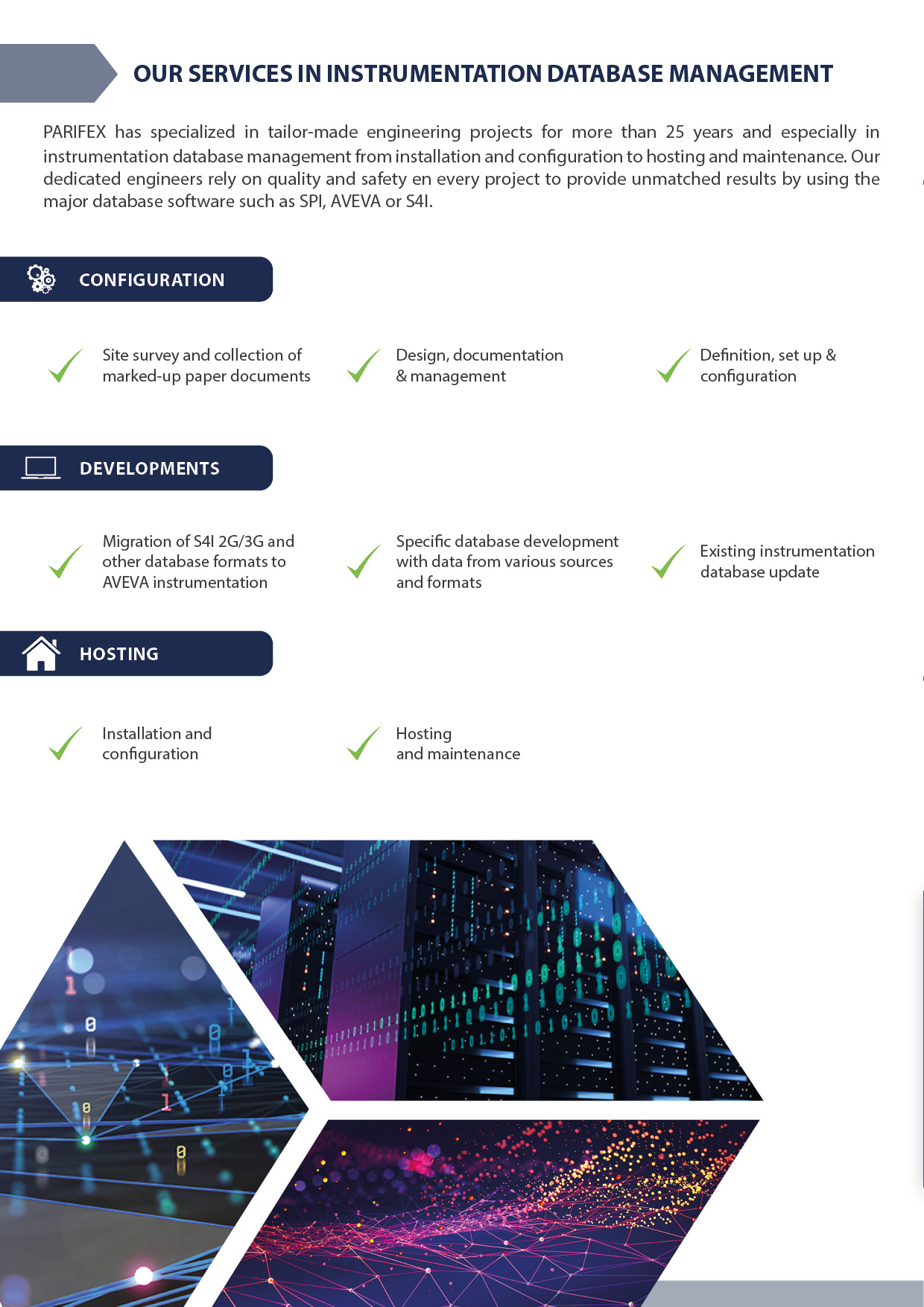
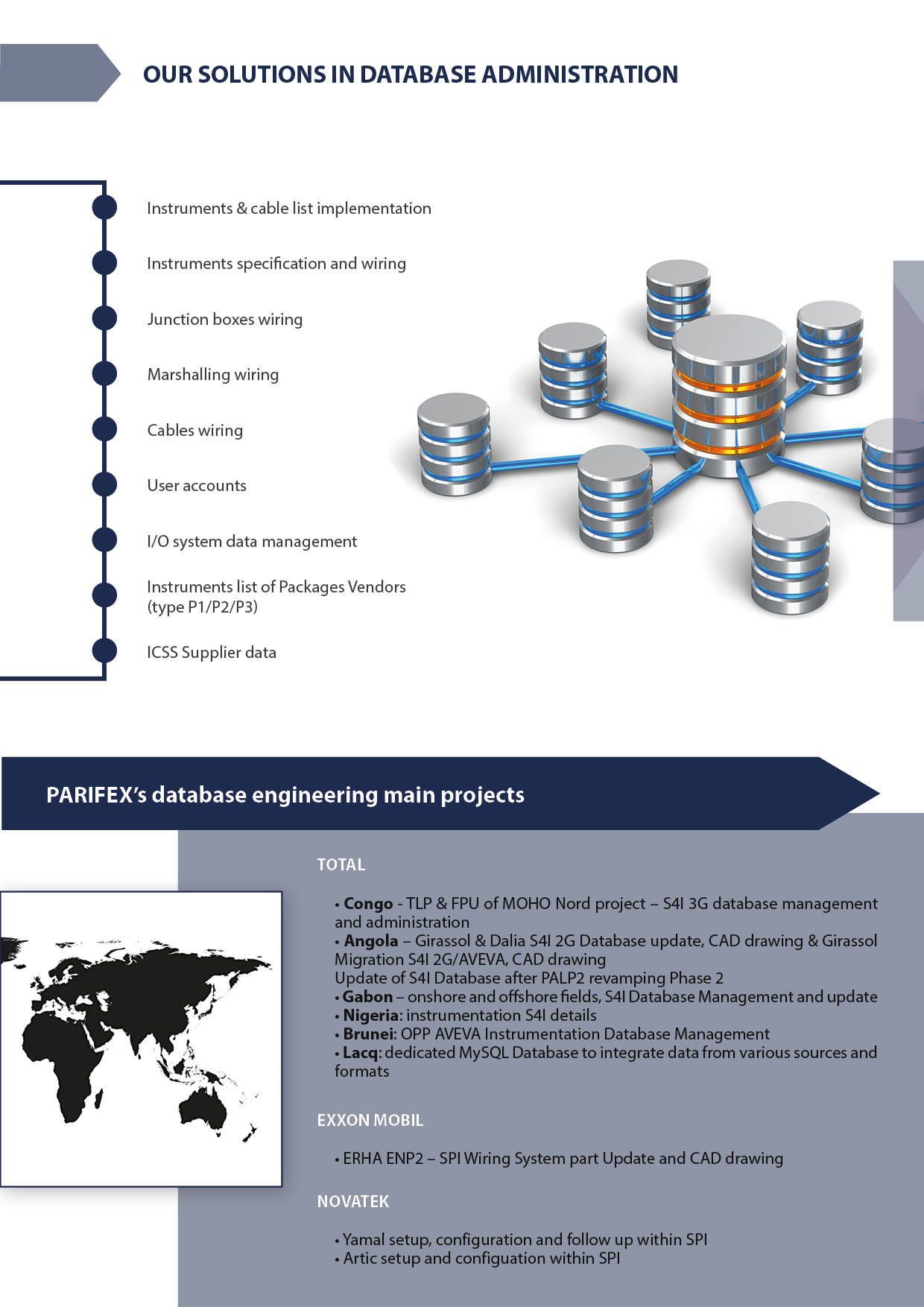
How we help you with your instrumentation database update, migration, and administration


PARIFEX has specialized in instrumentation database management from installation and configuration to hosting and maintenance. Our dedicated engineers rely on quality and safety to provide unmatched results by using the major database software such as SPI, AVEVA or S4I.


Contact us to talk about your instrumentation database management needs

Fields marked with * are required.

This field is for validation purposes and should be left unchanged.

Our ISO 9001 & 14001 Certifications have been renewed

Renewal of our ISO 9001 & 14001 Certifications for the quality and environment management system

Imprimer
Imprimer

We are pleased to announce the renewal of our ISO 9001 & 14001 for three years.

We focus to provide our customers high quality products and services which satisfy all requirements from applicable regulations and standards, product type approvals and our customers, while committing to the environment and sustainable development. 

It is your guarantee that every product and service provided by our company is world-class in quality and reliability!

ISO 9001: our commitment to a Quality Management System

  • Improve the quality of our activities and the satisfaction of our customers and partners by implementing a customer satisfaction process
  • Have our products approved
  • Strengthen our Human Ressources policy
  • Build a Business Recovery Plan

ISO 14001: our commitment to an Environmental Management System

  • Improve our environmental and system performances, protectign the environment and preventing from pollution during emercies, and complying with requirements
  • Stregthen the MTBF
  • Otpimize the electricy consumption of our equipment
  • Establish the company carbon footprint

Contact us

Fields marked with * are required.

This field is for validation purposes and should be left unchanged.

ITS World Congress 2021: the innovation in mobility industry

ITS World Congress spotlights innovation for mobility and transport

ITS professionals were thrilled to gather together after several months with no exhibitions for the ITS World Congress in Hamburg that focused on innovation and technology.

Some weeks ago, Hamburg welcomed thousands of transport and mobility professionals from around the world who finally gathered together since the pandemic began. This pending time has led to ambitious research and developments. According to Claire Legrand, Project Manager at PARIFEX, “Excitement was felt during this very first exhibition post pandemic. All the visitors, exhibitors, speakers, companies… were so pleased to meet again and see what their partners have become.” With more than 13,000 visitors, the ITS community has reasserted the major issues to improve mobility for every user: pedestrian, cars, trucks, bus, bikes…

Innovation

The congress has reveladed the latest technological progress: drones, no-contact ticketing systems, data collection systems…, attracting visitors’ curiosity. Marie-Pierre Aguirregabiria, Project Manager says “The ITS industry is rich in innovation through its dynamic players and numerous solutions and services. The sector is moving fast even if it is still looking for answers about the evolution of mobility. We are talking about many things, but there is still a lot to do to spread them worldwide.” The future is really building up by players who aim at offer a safer and eco-friendlier world to every user.

“The profession builds up today the world of tomorrow and tomorrow’s infrastructure to improve urban flows where every user could travel safely.”

Safety

Once again, road safety was the main topic of many debates. As speed has been identified by the World Health Organization as a key risk factor, it contributes to about 30% to 50% of deaths on the road. Auma Obama, Sauti Kuu Foundation Chairwoman that aims to give children all over the world an opportunity to realise their potential, pointed this plague during the Opening Ceremony. “I have espacially liked the Auma Obama’s speech that highlighted different transport issues, like in Africa.”, says Claire Legrand. Indeed, she rightly reminds that road accidents are still the major cause of death on the Kenyan roads. A substantive work will be necessary to change people’s behaviour and reduce speed violation, pedestrian injuries, etc. Cutting-edge solutions allow to strengthen safety on roads and in city centers such as speed enforcement, control of priority, traffic light, etc. According to Marie-Pierre Aguirregabiria, other global players are affected by road safety issues “We met developing markets in mobility such as countries in Eastern Europe, like Romania and Estonia. Countries worldwide are involved in improving road safety even if it is at different scales.”

Contact us

Fields marked with * are required.

This field is for validation purposes and should be left unchanged.

Core challenges faced by the public transport industry

Claire Legrand, Project Manager in Parifex, talks about core challenges faced by the public transport industry.

What are the core challenges faced by the public transport industry in relation to traffic management?

The greatest challenge nowadays is to improve road safety for all users. Speed has been identified by the World Health Organization as a key risk factor, influencing both the risk of a road crash as well as the severity of the injuries. Speed contributes to about 30% to 50% of deaths on the road. This relationship between speed and injury severity is particularly critical for vulnerable road users as pedestrians or cyclists. Therefore, an effective speed enforcement system is the most efficient way of reducing road mortality. It is even more effective when you can adapt speed levels to the conditions meaning when the risk is higher (with rain, congestion, category of vehicle..). Once the safety of the users is guaranteed, the more important thing is to improve the user experience for all users and inhabitants.

We are also convinced that we are facing a deep ecological challenge for the future. According to the UN, 68% of the world population will live in a city by 2050 including an increase in the number of vehicles, traffic flows and inevitably congestions. The challenge will be to be able to reduce congestions and noise pollution, improving traffic flows and assisting drivers.

We are very aware of these challenges and we want to be involved in this evolution by helping local communities and governments to build a safer and more eco-friendly transport offer.

What solutions can PARIFEX offer the industry to overcome these challenges?

PARIFEX offers multifunctional systems that can address all the challenges at once : primarily developed for speed and red light enforcement, they are also great tools to deliver essential data to help traffic management : origin-destination matrix, very precise counting and statistics.

It provides a complete mapping of urban traffic flows in order to reduce congestion, manage flows and then reduce carbon emissions. Obviously, it also enables to improve users’ comfort who benefit from a fluid and pleasant journey.

Regarding our solutions, we have decided to combine 3D-LiDAR technology with a camera which provides a really innovative system that can : work with all wheather conditions, analysis data in real time thanks to quick processing, see colors etc. Our sensor is very precise, we got French certification, and adaptable since you can adjust the speed limit according to the category of vehicle detected and the lane of the vehicle, and to other parameters such as weather or congestion. Our solutions are adapted for urban areas and for highways. It’s the Swiss army knife making the operators’ use easier through the compact and light system and its user-friendly interface.

What are PARIFEX’s long-term goals for the public transport industry?

As every company, PARIFEX plays a role in protecting the environment. And the company is already involved in an eco-responsible approach through an environmental policy for its products, partners, and customers, the measure of its carbon footprint, the promotion of everyday responsible habits, to name but a few. And our products are included in this policy we have engaged for several years now. We would like to help the public transport industry to offer a safer and a better world, where every one has a safe and respected spot: pedestrian, cyclist, scooter, light vehicle, truck, bus… Make sure that everyone can travel according to its needs and constraints in harmony with the environment.  

Contact us

Fields marked with * are required.

This field is for validation purposes and should be left unchanged.

Make your SCADA & TELECOM Projects a success


Discover the PARIFEX’s tailor-made engineering, procurement, and construction services

to manage your SCADA & TELECOM projects.


Contact us to talk about your SCADA & TELECOM projects

Fields marked with * are required.

This field is for validation purposes and should be left unchanged.

Local renewable energies: what if we become our own energy producer?

As renewable energies must be at least 23% in 2020 and at least 32% in 2030 of the French final energy consumption¹, territories must play a major role in the current context of ecological transition. Local renewable energies and diversified power sources are a great asset for territories and consumers who benefit from lower cost green energy. Geothermal, wind, biomass…, energies are produced according to local needs and depending on the specific features and resources of each territory. The production of clean energy is an issue for companies as well that could benefit from the local production advantages.

Production depends on local people’s needs

There are different kinds of renewable energy such as hydraulic, wind, solar, and bio energy. Each community must consider its specific features in order to produce appropriate power to the local use in a good legal frame. There are three major ways to produce renewable energy:

  1. Electricity (as solar and wind energy) ;
  2. Heat (as wood and solar) ;
  3. Gas (methanisation).

An analysis of the territory is necessary to map a global view of the local economic players, the existing local channels and the different power sources. The cooperative clean energy production enables to improve the local governance, encourage the co-construction, and make citizens understand the issues. 

Nowadays producing energy suffers high costs of production, delivery, etc., and requires huge area of land. What if territories create small power stations as closely as possible to users? Everyone could produce its own energy. Close to Paris, people are encouraged to find local renewable energy stations. Some neighborhoods have bet on geothermic production and solar panels generate needed heat. It is also an attractive solution for energy providers since the unused power is redirected to traditional channels.

Involving companies in the process of local renewable energies

More and more companies tend to initiate a reflection on their consumption and produce their own renewable energy. This new way of production seems to be one the major solutions to achieve regulated carbon neutrality and then reduce their impact on climate change. Reducing the carbon balance is the very first step to control the company impact on climate change². The French Ecological Transition Agency has created funds to support companies with an energy program³.  Some of them already produce their own energy such as the Algerian LR1 pipeline equipped with solar panels that produce only the necessary power. PARIFEX helps companies to search generating equipment and, supply, and install generating equipments wordwide.

Contact Us

Fields marked with * are required.

This field is for validation purposes and should be left unchanged.

NEWSLETTER #3 – Editorial by Franck Peyré, CEO OF PARIFEX

Dear partner,

The first half of 2021 has been as dynamic as expected. More than a year after the pandemic began, we are pleased to be able to provide the same quality of service while teleworking. Actually, we are working with staff representatives on an agreement in order to keep on using telework and offer better work conditions to our employees.

In March, Iran inaugurated the gorgeous Persian Gulf Bid Boland gas refinery. Bid Boland will have an annual production capacity of, inter alia, 10.4 million tons of methane and 1.5 million tons of ethane. We are proud to have taken part in this ambitious project as main automation contractor providing integrated control and safety systems with our partner Sazeh Consultants. This project opens a new chapter for the future of the gas market, its challenges and opportunities.

Regarding the mobility market, we are pleased to see/note that the major mobility events are held in 2021. Some weeks ago, the last Autonomy Digital edition was a success and highlighted the high expectations from the digitalization of mobility. This 2.0 edition gathered together professionals of transport from all over the world who share a common goal to draw with citizens the outlines of new mobility. And the year is not over since we will meet soon at the ITS World Congress in Hamburg.

To conclude, we are proud to announce our partnership with Ouster, providing high-resolution lidar sensors, to offer superior imaging of the environment. The French Ministry of the Economy and Finance has allowed PARIFEX to use the 3D-Lidar technology in its speed control and data collection systems.

I wish you a wonderful summer and look forward to meeting you in September in a serene context. 

I want to be contacted

Fields marked with * are required.

This field is for validation purposes and should be left unchanged.

Shared mobility, citizens and mobility, sustainable issues… the key topics of Autonomy Digital

Autonomy Digital 2021, the international show dedicated to sustainable mobility, is now over. Mobility professionals met virtually to think about the future of mobility and share the growing policies and good practices. Citizens and mobility, green energy, shared mobility… transport digitalization has really begun.

Adina Vălean, EU Commissioner for Transport at European Commission, and the EU strategy

Transports are essential to society. This was how Adina Vălean launched Autonomy Digital 2021. Regarding the mobility digitalization, she highlighted the necessity to be more ambitious and to adopt a strong strategy. According to the Romanian politician, the pandemic has actually changed travel behaviors and encouraged the use of electric cars and e-bikes on which it is necessary to focus on. Transport digitalization is speeding up and travelers tend to use more and more shared mobility solutions. Mobility is one of the EU priorities for the next ten years with the ambition to provide reliable, automated, flexible, and safe services. The environment is at the heart of the strategy as well in order to increase sustainable transports. And there is plethora of solutions to decongest cities and reduce traffic jams responsible for climate change. The Commissioner reminds that mobility is everyone’s matter and must be accessible to anyone, regardless the local strategy.

Leuven bets on citizens and mobility

Leuven, in East Belgium, is the well known European capital of innovation where the community seems to have found the winning recipe by involving citizens in its mobility politics. According to the Alderman mobility David Dessers, citizens are the key for such successful change. The Leuven 2030 society has been created to make people decide on the future of the city.

They are often asked in order to define the modes of transports they really need. For Leuven, involving citizens in the mobility evolution is the best way to make them accept the city changes in the following years. Leuven aims to double the number of bike user as well. Actually, the number has already increased by 44% between 2016 and 2019 while the car use has decreased. Moreover, local authorities are pursuing both mobility and climate policies together in order to reduce the consumption of CO2. The Belgian city bets also on a deep changing in behaviors through a larger pedestrian zone.

The Milan electrical challenge

Milan has a large transport network including metro, bus, trams, and trolley lines. Faced with the environmental challenge, the Italian city has decided to generalize electric shared vehicles. That is why 70% of the vehicles is now powered by green energy produced by photovoltaic panels in the city town. Milan plans to deploy full electric solutions such as 1,200 electric bus, renew bus depots and provide charging infrastructures.

Contact Us

Fields marked with * are required.

This field is for validation purposes and should be left unchanged.

Parifex
Privacy Overview

This website uses cookies so that we can provide you with the best user experience possible. Cookie information is stored in your browser and performs functions such as recognising you when you return to our website and helping our team to understand which sections of the website you find most interesting and useful.